


Strategic asset allocation updates to our Governed Range portfolios
We’ve recently updated the strategic asset allocations of our Governed Range portfolios - the Governed Portfolios and Governed Retirement Income Portfolios. Trevor Greetham, Head of Royal London Asset Management’s Multi Asset team which manages the portfolios, explains the three key changes.
Why we’ve updated the Governed Range portfolios
We don’t believe there’s such a thing as a truly passive approach in multi asset investing. We actively manage our portfolios to help improve risk-adjusted returns while maintaining broad diversification. The Governed Range is active on three levels:
- A broadly diversified strategic asset mix seeks to maximise returns after inflation for a given level of risk.
- Positions are adjusted tactically with a view to adding value as the global business cycle evolves.
- Each asset class is implemented actively at the security level to maximise returns.
Active management is at the heart of our multi asset approach, which extends to our mix of asset classes. Alongside equities we hold physical property as an alternative source of real growth, and commodities to help protect the portfolios against unexpected inflation.
Each year, we review our long-term strategic asset allocation to make sure it’s still appropriate. This allows us to respond to changes in asset valuations, strengthen the portfolios against new risks and, where appropriate, introduce new asset classes to the mix.
We’ve made three key changes as part of this annual strategic asset allocation review to help strengthen the portfolios and improve long-term risk-adjusted return potential.
- Increasing emerging market equities
Taking advantage of improved economic management and access to faster-growing companies. - Diversifying credit exposure
Broadening our sources of credit return to build resilience while retaining attractive income opportunities. - Increased government bond duration
Locking in higher yields that offer more attractive long-term opportunities, improving the defensive role government bonds can play in portfolios.
1. Increasing our allocation to emerging market equities
Emerging markets are better managed than they used to be, and their equity markets have grown less volatile relative to developed markets over recent decades (chart 1). Emerging markets also provide access to fast-growing technology companies, often at more attractive valuations than broader global equity markets.
We believe a larger allocation here can improve long-term risk-adjusted returns. We’ve funded this change by reducing our relatively large strategic exposure to UK equities, but we continue to see UK equities as an important diversifier due to their attractive valuations and track record of weathering inflation shocks.
Chart 1: Rolling 10-year volatility of developed market equities vs emerging market equities
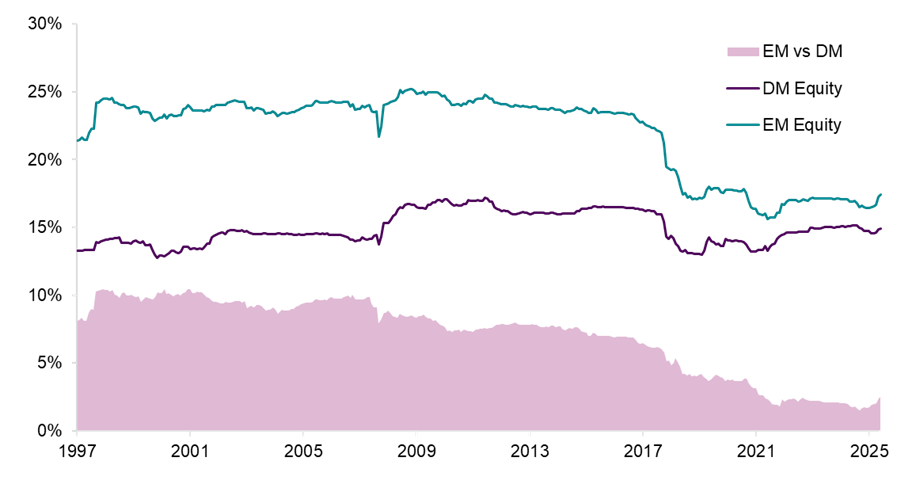
Source: Royal London Asset Management, Bloomberg, as at 31 May 2026. Monthly returns of MSCI World index and MSCI Emerging Markets index.
2. Diversifying our credit exposure
Credit spreads, particularly in high US yield bonds, remain tight compared with historical levels (chart 2). Diversification is especially important in this environment as it allows us to maintain attractive income while improving portfolio resilience as the economic cycle matures and default risks may increase.
Broadening our sources of credit return reduces our exposure to shocks affecting individual issuers or the wider economy. We favour areas offering reliable income with a lower correlation to US high yield bonds, including European asset-backed securities where we believe valuations provide more attractive risk-adjusted opportunities.
Chart 2: US high yield credit spread over treasuries
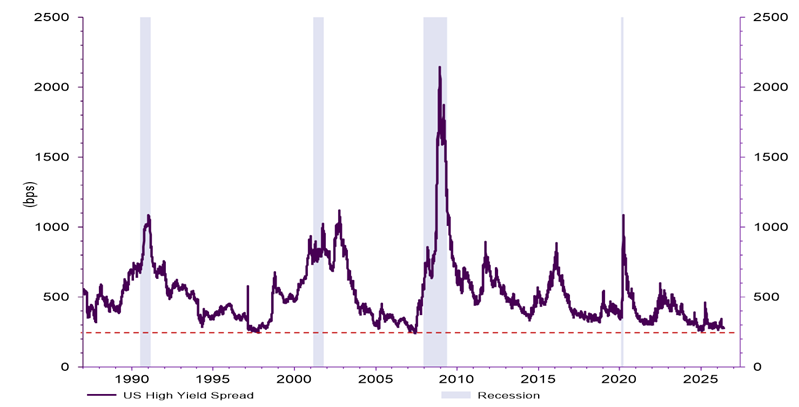
Source: LSEG Datastream, as at 31 May 2026.
3. Increasing government bond duration
Government bond markets have repriced significantly since 2022 with yields now at more attractive long-term levels (chart 3).
Inflation uncertainty remains high given Middle East tensions, but we believe today’s higher yields offer better compensation for interest rate risk. Higher yields also improve the potential for government bonds to deliver positive returns if the economy slows or if disinflation prompts central banks to cut interest rates.
Chart 3: UK 10-year yield
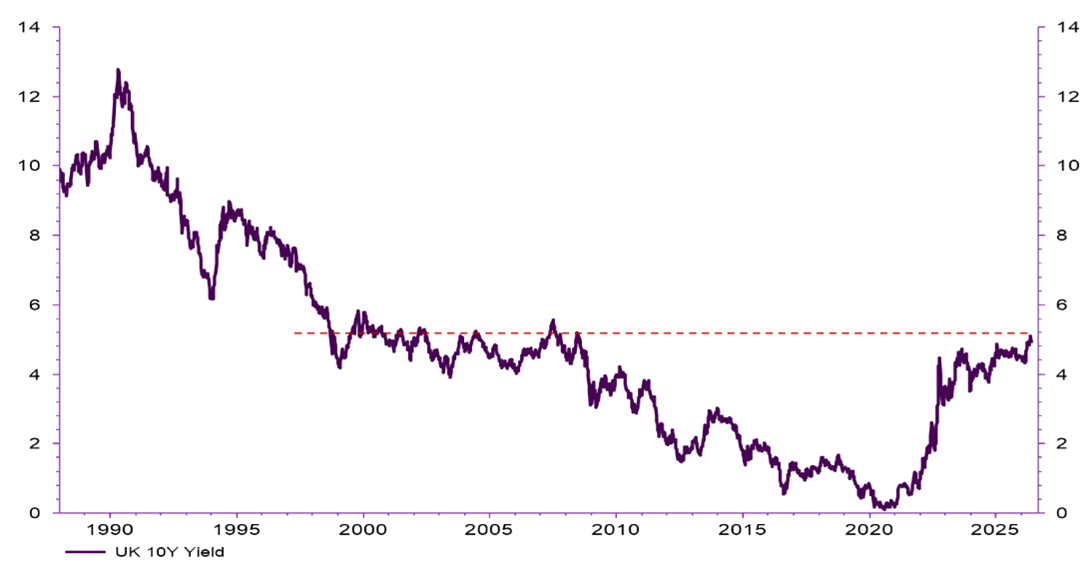
Source: LSEG Datastream, as at 31 May 2026.
Tactical positioning
Starting with a well-diversified strategic asset allocation, we make tactical adjustments on a more frequent basis to reflect changes in the economic and market outlook.
We have benefitted from a tactically positive position in stocks over recent weeks, as markets ended June with their strongest quarterly performance in six years. We have also moved to a more positive position in commodities, having seen value in the asset class as prices fell over Q2 on signs of a fragile peace deal.
Find out more
To see the strategic asset allocation changes for each of the Governed Range portfolios, visit the fund changes section of the website.


